Be the change that you wish to see in the world.
Mahatma Gandhi on change



Just another fazz.my site
Be the change that you wish to see in the world.
Mahatma Gandhi on change


In Star Trek The Next Generation, the relentless Borg collective travelled through space to assimilate various civilisations into the single Borg collective. “Resistance is Futile” was the answer to cries of defiance by the civilisations being assimilated. Similarly, the march of technology is doing the same to our own civilisation, breaking all norms and borders towards enveloping the world. Perhaps what is important is having the resilience to cope with the changes being brought by technology, and being able to adapt quickly.
We fear that artificial intelligence – AI – will be taking away jobs from us in a big way. Although similar concerns were raised during the days when robots were introduced to the factory floor to automate manufacturing – in truth, the impact to the availability of human jobs was not significantly affected. But this time we now increasingly fear that jobs for humans will finally be threatened by technology – by AI, purely because technological development is far outpacing our ability to learn and adapt to new things. The jobs we know today may no longer be relevant in the future. Will there be new jobs or occupation in the future in such AI driven economy? And we know that it will not be easy for us to be retrained, reskilled – to unlearn and relearn new things. Thus, this begs the question of what kind of education should our children be given in order to survive in this uncertain future? Perhaps we should forget about teaching the next generation biology, physics, law, accounting etc. Perhaps we should teach them even more fundamental skills and habits such as reading, creativity, empathy, adaptability, curiousity, research, learning, problem-solving, interaction and the likes. What do you think?

















I often have discussions around the issue of accountability at work.
My work deals with establishment of limits of authorities, internal controls, processes and all other stuff meant to ensure that organisational resources are expended wisely towards improving performance but without resulting in leakages or worse.
Frequently, the worry is when people have access to resources like money, they will squander them irresponsibly. When you have audit committees and other oversight and legal consequences, you naturally take safe and conservative positions in aiming to control amounts of authority and empowerment given to the rest of the organisation.
Unfortunately, this is a folly. It gives us a false sense of security that just because authority is restricted to but the very few at the top, then we have better controls and organisational performance.
The problem with concentration of authority at the top means that only the few people at the top of the organisation are authorised in making decisions for the organisation. The reality in today’s world is far from this. Because we live in a VUCA (volatile, uncertain, complex, ambiguous) world, knowledge and capability to make correct decisions are far more distributed. No single person has all of the information… and most certainly the few people at the top don’t have all of the information, nor the capability, nor the experience on all issues that the organisation is faced with. This is true especially with large and complex organisations. And hence, when these few elites make those decisions – there is therefore higher possibility of those decisions being wrong. The risk to the firm is far higher when power and authority is concentrated at the top.
The best way to address this issue of authority and decision-making powers in a VUCA world, is to empower decision making throughout the organisation to the relevant levels that have the necessary information, knowledge, experience and the performance that needs to be delivered. This seems quite obvious and natural, but in real life – not always applied. The reason for this lack of empowerment and autonomy is because the powers at the top are not confident enough that the rest of the organisation will be accountable for the decisions and resources to which they were given.
A simple solution to this is to increase transparency within the organisation several fold. Let me explain and contrast two different models of governance: the first is of the traditional concentration of control at the top; the second is an empowerment and technology enabled transparency model.
Let’s say that the board of the company is concerned about the level of travelling and entertainment that the organisation is incurring.
So in the first model of governance, in order to control these expenses (and also the undesirable side effects of these), the board decides to limit authorities to decide and spend. This will work in reducing such decisions and spend, but also at the same time clip the opportunities for the organisation, and at the same time create false sense of security when the board is influenced into a decision without knowing all information and it turns out to be wrong. This happens when the board has to make too many operational and administrative decisions that it has little time to go into each decision in great depth. Of course, to address this the board could decide to take more time and detail to go into great details of everything the firm aims to do – all while applying a mindset of skepticism of the management. This in the long run creates an unhealthy culture within the firm.
In my preferred second model of governance, let’s say the board institutes a governance model of transparency around travel and entertainment decisions and spend. This model of transparency requires all spend on travel and entertainment be published on the firm’s internal website which is accessible to all employees in the firm. This can be achieved with information technology solutions without having human intervention. With such spend being transparent to all parties – decision makers and individuals empowered with these decisions will be more cautious themselves in deciding and incurring such spend. Thus, in this model of governance, we create a culture of self regulation which results in greater level of organisational efficiency by dispensing with surplus internal controls, committees, and supervisory steps and units. In this model of governance, people who are empowered with authority will quickly develop attributes of accountability, simply because the things they do and the results that they achieve are transparent throughout the firm.
Thus, transparency drives accountability. Radical transparency drives radical accountability. The relationship is linear.
As a member of the Beyond Budgeting Roundtable (BBRT) I have been studying management activities that encouraged or impeded performance and adaptability in organisations.
Initially, it started out with the dysfunctional effects of budgeting. We all hated the budget, yet many companies go through the annual budget process religiously with nobody even questioning why we do it.
I started to question the value of budgeting when many of our units within the organisation start to claim that they could not carry out certain (seemingly important) tasks because of the lack of a budget. Whilst this is a shocking thing to hear, it is not uncommon. Listen carefully, and you will discover that this is one of the most common “excuses” for not being able to do things.
But as I investigated further, it was not just about the budget. It had to do with the whole interconnected nature of management activities, including the way the organisation is governed, the way people are made accountable, the way we motivate people and as well as the way we plan and control the organisation. There are twelve principles that fall into these categories of management practices. It can be found on the BBRT website as follows: http://bbrt.org/about/the-beyond-budgeting-principles/

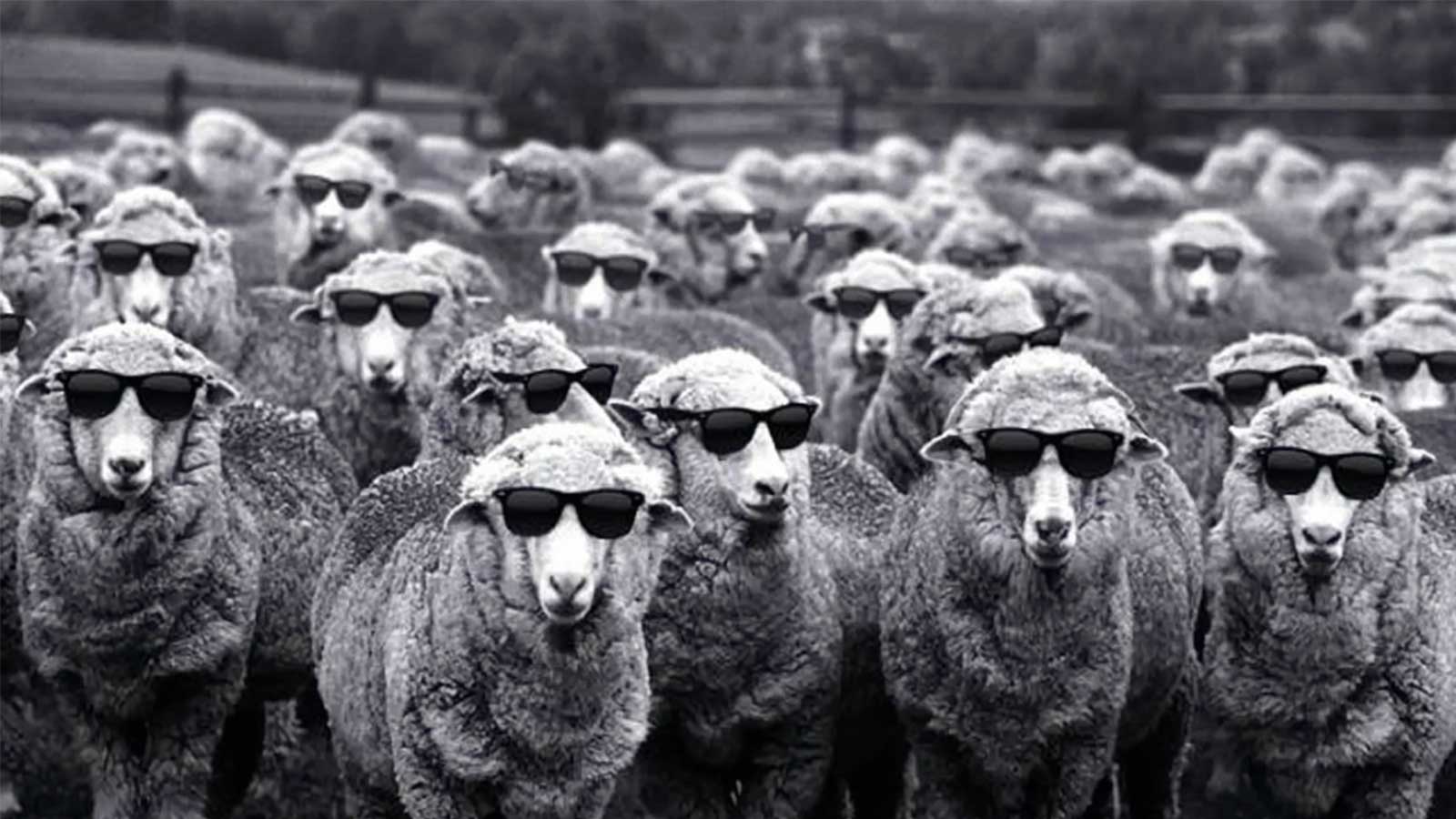
We live in an age where technology, customer expectations, and markets shift rapidly. Sticking with dogma and age old ideas, methods, products and services will no longer cut it.
Assuming that we believe in the above – and I would not be too far off the mark, I’d guess – then we need to be able to adapt, respond, anticipate these shifts before and as they happen. We need to be agile, and most of all we need to be innovative. We need to find even more effective solutions to old and new problems. What worked in the past will not guarantee to work in the future.
Innovation is the key to winning in the fast changing world.
But innovation is not just an activity. It is more than that. It is a mindset, a culture, a function that everyone plays – and not just some people in labs and research centres.
Like creativity, you cannot force innovation. Like creativity, innovation must be allowed to flow, naturally. The biggest enabler for innovation is allowing individuals the freedom to have independent thought.
The seed of a new idea would only come from a ground that is fertile with many different thinking. In groups of people, society and organisations – allowing people to think different allows them to explore new ideas, test new perspectives, find new solutions in ways never been thought of before. A social group that emphasises conformity over individuality will psychologically limit the collective minds. This is often the subtle tyranny of the majority.
A society or organisation that is conscious of these subtle effects will need to take steps to allow individuality and take these steps even further by bringing in people who would be expected to see things differently – given they come from different backgrounds and thus would naturally see things differently. Artists will see different solutions to problems than would engineers or accountants. People from different industries will see different ways to solve problems. This is vital in order to encourage innovation. Societies and organisations will need to infuse their own culture and groups of people with people from other backgrounds in order to create a much richer diversity of thought.
Strategy is not the problem. Leadership is.
Leadership to drive strategy, change and performance is a much needed but scarce commodity.
May programmes have been introduced in firms to develop leaders, yet not many result in satisfactory outcomes. Why?
Most programmes concern themselves with training, when in reality leadership needs to happen “out in the wild”, rather than in a safe environment like the classroom.
It is often said that leadership is taken, not given. Leaders will always rise to the occasion. But what occasion is needed?
But how do we get leaders to reveal themselves?
Create situations that demand leadership.

Any intelligent fool can make things bigger, more complex, and more violent. It takes a touch of genius — and a lot of courage — to move in the opposite direction.
-Albert Einstein